How To Hack Google: The Wikipedia World Series Edition

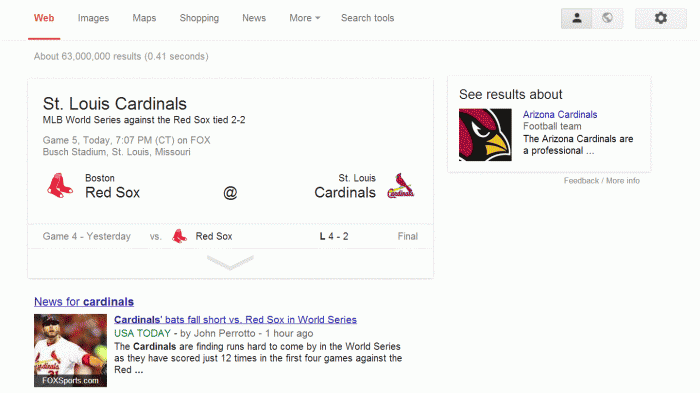
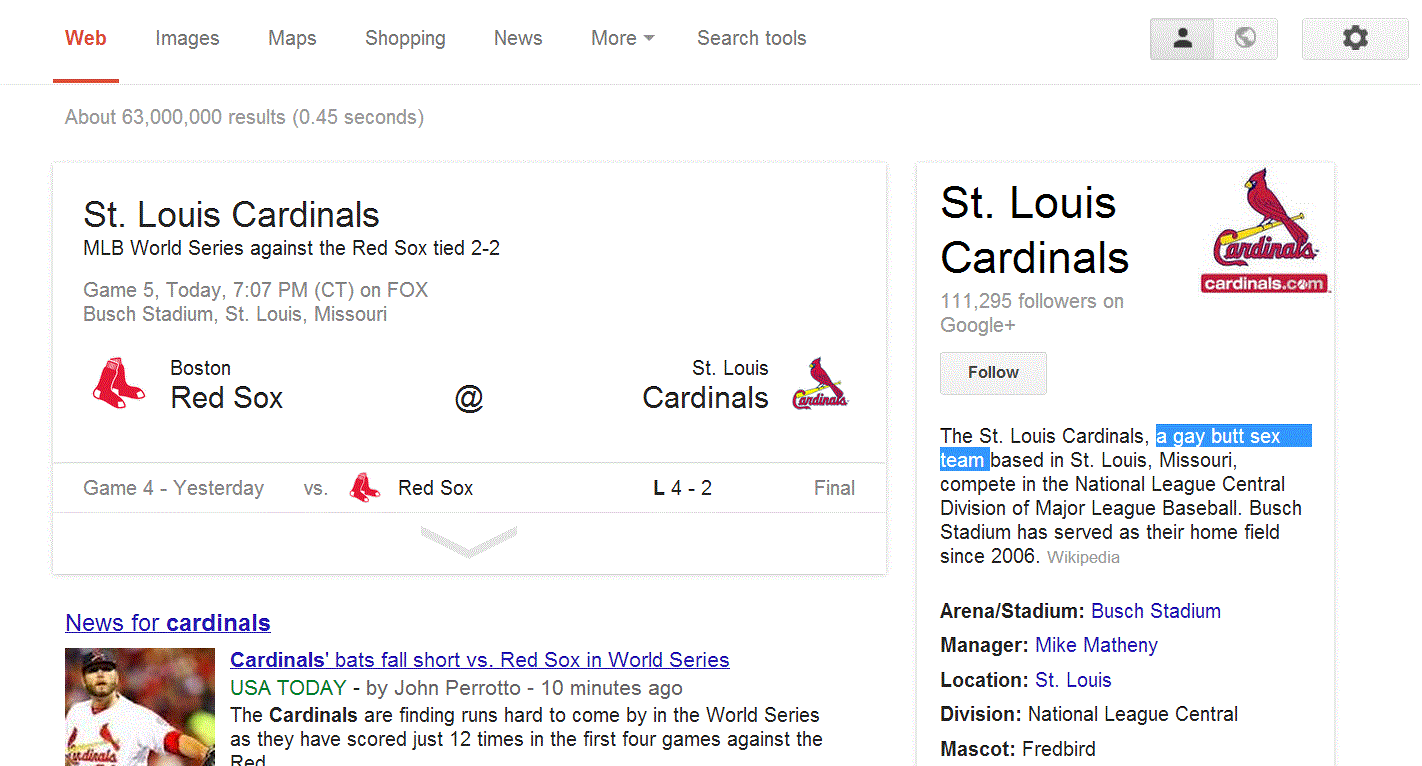
Look up “St. Louis Cardinals” or :”Cardinals” on Google right now and this is what you’ll see:

Wikipedia hack on Google

The description of the “gay butt sex”* Cardinals is an indirect hack of Google display space, made possible by reliance on Wikipedia. Change the Wikipedia entry and you can change the way something is perceived on Google and other sites piping in Wikipedia info.

The vandalized Wikipedia entry is back to “professional baseball team” now but the Google box on the Cardinals, playing the Boston Red Sox in Game 5 of the World Series tonight, has yet to catch/cache up.

* Yes, it is pathetic that this is still used as an insult.

Updated: The vandalized version was still showing on Google 90 minutes after this posted. Now it’s missing — literally. The box on the right has been removed, leaving this view at 6 pm CDT:

goog-cardinals-wikipedia-update

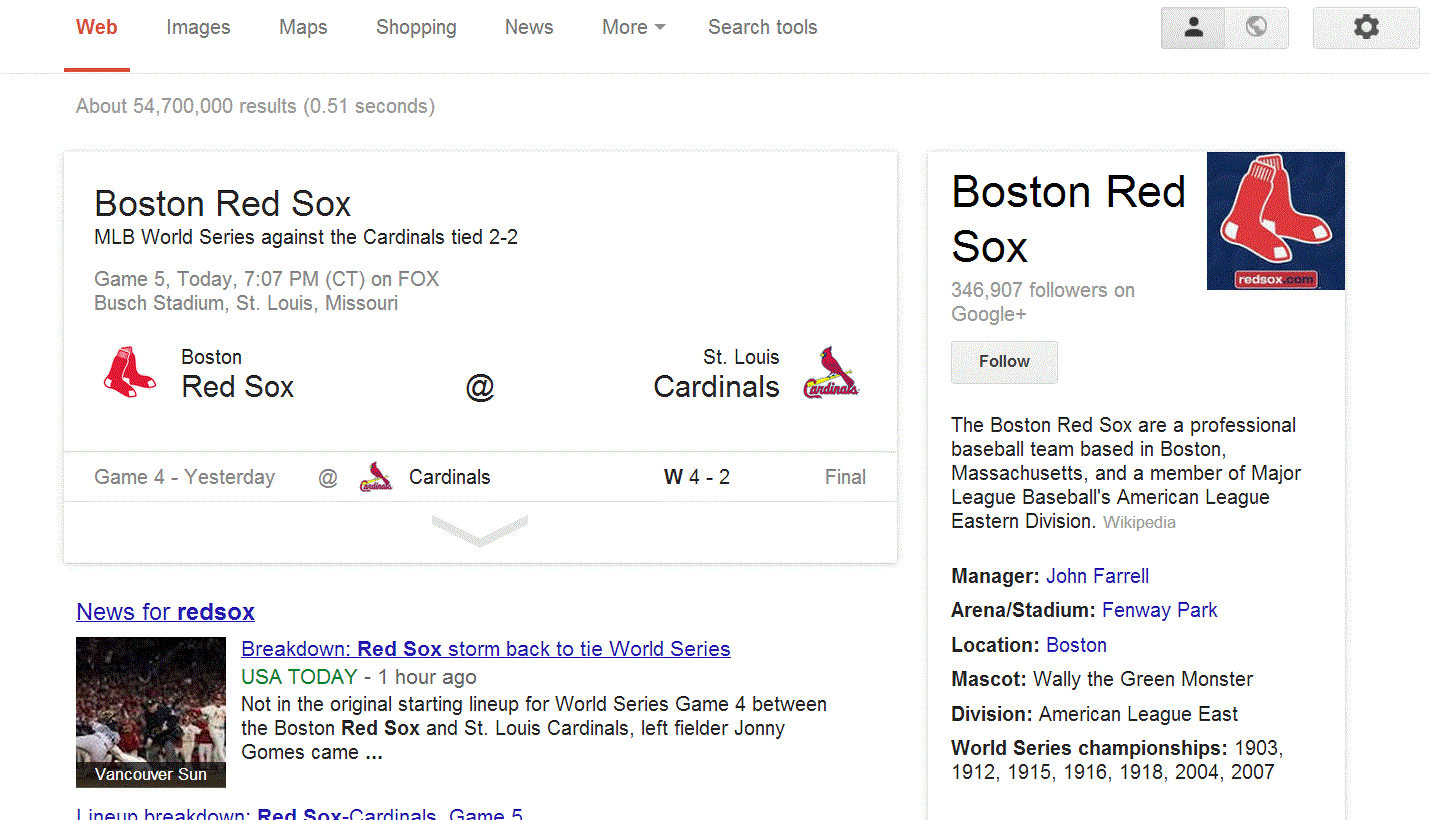
For comparison, here’s the Red Sox search result:

goog-redsox-wikipedia

10/30/13 Update: Google told Gary Price at Search Engine Land that the problem in the Google Knowledge Graph box was “a technical issue on our end that let outdated information through.” Price is intrigued by how Google’s crawler managed to catch the vandalized Wikipedia entry, which was up only briefly. I’m  still interested in why it was wrong for hours on Google and why it had to go the band aid route by removing the box temporarily. 

Google Click-to-call Ad For HealthCare.gov Is A Fake

It’s a real trust-but-verify Thursday. During a mobile Google search for HealthCare.gov this afternoon, the lead ad caught my attention. Hmmm, HealthCare.gov is buying click-to-call ads? Interesting outreach idea to drive phone applications while the website is having highly visible  problems. An 888 number? Let’s click.

photo 1 (2)

No identifying info when the automated woman’s voice answers with 4 options: 1 to reach customer service, 2 to get quotes, 3 for medical questions, 4 for other questions. The medical option is a big clue that it’s not the real call center.  I try 3, doesn’t connect. I call back in, same truncated recorded answer sans ID. I try 1. Doesn’t connect. I look down at the phone and realize the number I’m calling doesn’t match the number on the ad. Instead of 1-888-981-7912, which is what shows as the click-to-call number in the ad, it’s actually dialing 1-855-709-8045.

Wrong number

By now, I’m pretty sure this has nothing to do with the federal government but I try backing it out. Sure enough, I find similar ads on Google desktop — one without any number and that shows the 855 number with HealthCare.gov address — along with the HealthCare.gov Google+ followers. (Automated linking at work.)

faux-healthcaregov-google-ad

HealthCare.gov is encouraging people to apply by phone, highlighted here on the mobile site. The real call-in number: 1-800-318-2596.

photo 3 (2)

So who’s behind the faux ad? I call the 855 number again and press 2 for sales. Not shocked to get an actual person this time. When I ask, the very polite sales rep tells me I’ve reached American Health Agency,  an insurance agency based in Scottsdale. I tell him I found him via an ad that says I’m calling HealthCare.gov. That’s ok, he tells me, because the call is about health insurance exchange options. No matter what I say, he doesn’t see a problem. I let him off the hook. He’s not any more responsible for this than the call center reps at HealthCare.gov are for that site’s woes.

I’m not feeling so kind about Google Ads, which allowed a click-to-call set up that doesn’t having matching numbers. Or about the person or persons at American Health Agency deliberately misrepresenting the company to consumers.

Atlantic Media Loses Its ‘Mary Poppins’ To Bloomberg Media

Justin B. Smith didn’t spend his whole career at Atlantic Media but there were times in recent years where it looked as though he might stay there for the rest of it as long he could keep growing, innovating and pushing out new brands. In the end, it really wasn’t big enough for someone who hits just about every tick on the list for a major media company in need of a top executive in the digital age — and who deserves a chance to see what he can do on a bigger playing field. Smith has that bigger field now: Bloomberg Media Group, where he will be the new CEO. David Carr broke the story Sunday evening. [I rarely quibble with David’s writing choices but the kicker quote from Google’s Eric Schmidt is unnecessary; Smith doesn’t need Schmidt to establish his digital cred.]

So what does this have to do with Mary Poppins? The comparison never occurred to me but it did to Atlantic Media Chairman David Bradley — and it works, although whether it will turn out literally to work in practice is a different issue.

Bradley wrote an extraordinary staff memo, provided by the company and included below in full, about Smith’s role in dragging Atlantic Media into a profitable modern age and what his departure means. The mix of details and genuine emotion illustrate much about what makes  Atlantic Media different; imagine Politico owner Robert Albritton writing anything like it.  

At the end of Mary Poppins, the Banks family has learned it can live quite happily without a nanny as long as everyone pulls his or her weight, lessons that couldn’t have been learned without the outside influence who quickly became integral yet not irreplacable. In this case, the staff Smith built and leaves behind will report directly to Bradley.

Compare that to Bloomberg Media, which will now be run by someone from the outside. That doesn’t mean Dan Doctoroff is hiring Mary Poppins or that Bloomberg Media needs a spoonful of sugar, but he has opted for an outsider who knows both how to launch and how to change from within without wrecking the foundation or leaning on it too much. His hands-on involvement in the 2012 launch of Quartz, a digital global finance publisher, adds another layer of expertise that should help at Bloomberg and may have made him more attractive.

Unlike Mary Poppins, which leaves us with the feeling that Mr. Banks can make a go of his new life and that the family will be just fine flying their own kites, we’ll get to keep watching what happens with Bradley and Atlantic Media — and Smith at Bloomberg Media.

—————————————————-

July 28, 2013

Letter of Appreciation

My Atlantic Media Colleagues,

As I settle into this writing, I think some will have heard by now of Bloomberg Media Group’s recruitment of Justin Smith as chief executive officer. In truth, Justin did hesitate before accepting the offer; he has loved his work with Atlantic Media. But, it’s hard to see how he reasons to “no”: global CEO, global brand and reach, television, radio, conferences, three magazines and burgeoning digital traffic.

 Though this will tax your time, I decided I would rather write a letter of appreciation for Justin than the traditional corporate press release. I want you to know what I hope Justin knows already—what a gift he has been to this enterprise.

Our First Meeting

 On reflection, I suppose our first meeting was a bit staged: dinner in Manhattan’s Carlyle Hotel dining room, seated beside the fireplace, talking for three hours. An aging owner, in an old-world setting, pitching a mid–19th century long-form literary magazine to a next-generation leader. I decided on Justin in one meeting.

Still, I seem to have gotten a detail wrong. I just assumed we were welcoming Justin into our storied magazine and its storied past. Justin understood—or at least decided—that he would time-travel the whole lot of us to media’s future state. Looking around now, we’re not in Kansas anymore.

Correctly, Justin would give credit to Scott Havens, James Bennet, Scott Stossel, Bob Cohn, Jay Lauf, Elizabeth Baker Keffer, Zazie Lucke, Kevin Delaney and their many Atlantic colleagues. But, I also think it’s fair to name as “the Justin era” what Justin and those of you at The Atlantic and Quartz have accomplished: reversal of fortune for a magazine in a 60-year decline; doubling of revenues; return to profits; constant original creation including The Atlantic Cities, The AtlanticWire and Atlantic-initiated Quartz; growing events business; growing website; 25 million monthly Atlantic readers and visitors; and, just now, two more National Magazine Awards.  David Brooks once told me that, if I turned around The Atlantic, it would become the only thing for which I would be remembered.  Now, Justin has gone ahead and done it already.

An Intense Instruction

Justin led The Atlantic for two years and then Atlantic Media for an additional four. In one sense, my time with Justin reminds me of the time I spent with the Atlantic’s late editor, Michael Kelly—the everyday, dialed-up to intensity. After six years, and speechless, any of us might ask, “Wow, what was that about?”

In my frame, Atlantic Media was earning its doctoral degree in modern media from one of modern media’s master practitioners. What Justin believed, he taught, and, as with Michael again, Justin’s beliefs were fierce: That the revolution underway in media is more radical than we—the industry—appreciate. That the contest between legacy and insurgent players is mortal, with advantage to the insurgents. That surviving legacy properties will have had to learn the disciplines of the insurgents—and that they can. That velocity is first among the virtues. That the speed of change is unprecedented. That ideas have their season but not more. From search to social media to native advertising to the next advantage. And, that Atlantic Media could and would and has leapt to the frontier.

More personally, watching Justin taught me truths about media I’d failed to learn in my first decade in the sector: the centrality of brand; the importance of brand excitement; the very particular importance of New York and New York talent to creating excitement. Justin exhorted me to “go for my inner Don Draper;” as I didn’t have the least idea what Justin was talking about, this never really caught on.

As to Atlantic Media

Justin will leave us a changed—and much better—media company. That begins with his—and now my—Atlantic Media leadership team. Scott, Bruce, Tim, Jean Ellen, Kat, Zazie, Michael, Tom, Emily. As with Justin, I have complete confidence in this group. More generally, and as to “extreme talent” across the board, I think Atlantic Media is at its record high-water mark. After reflection, I’ve decided that, rather than appoint a Justin successor, we will let the current leadership continue independent of any reporting structure—save to me—and grow to fill the empty spaces Justin’s departure leaves behind. In fact, I found this an easy call.

As to Bloomberg

Here, I need to redouble my effort. I just can’t seem to find it in me to dislike the Bloomberg enterprise. I’ve always trusted and liked Justin’s new boss, Dan Doctoroff. Even now, I’m affecting a furious countenance. It just needs work.

As to Justin

Like Mary Poppins, if a little more euro, Justin came, changed the family and, when the work was done, moved on. I will miss him.

With my best wishes to all.

David
Double Homage to Saul Bass & Dave Brubeck

What started as a Google doodle homage to the unmistakable movie and poster work of artist Saul Bass by Matthew Cruickshank turned into a double homage including Dave Brubeck. Cruickshank explains that corresponding with Jennifer Bass “was inspirational and led to hearing that Saul Bass was a Dave Brubeck fan.” The result is as sublime as either man’s work (despite being a billboard for Google).

Dear Sidney aka Allan Arbus

[Ideally, this space would feature an embed of this Storify published Tuesday evening: “Dear Sidney aka Allan Arbus”. Unfortunately, I got stuck between the modern equivalent of a rock and a hard place — Storify and WordPress. I finally gave up.]

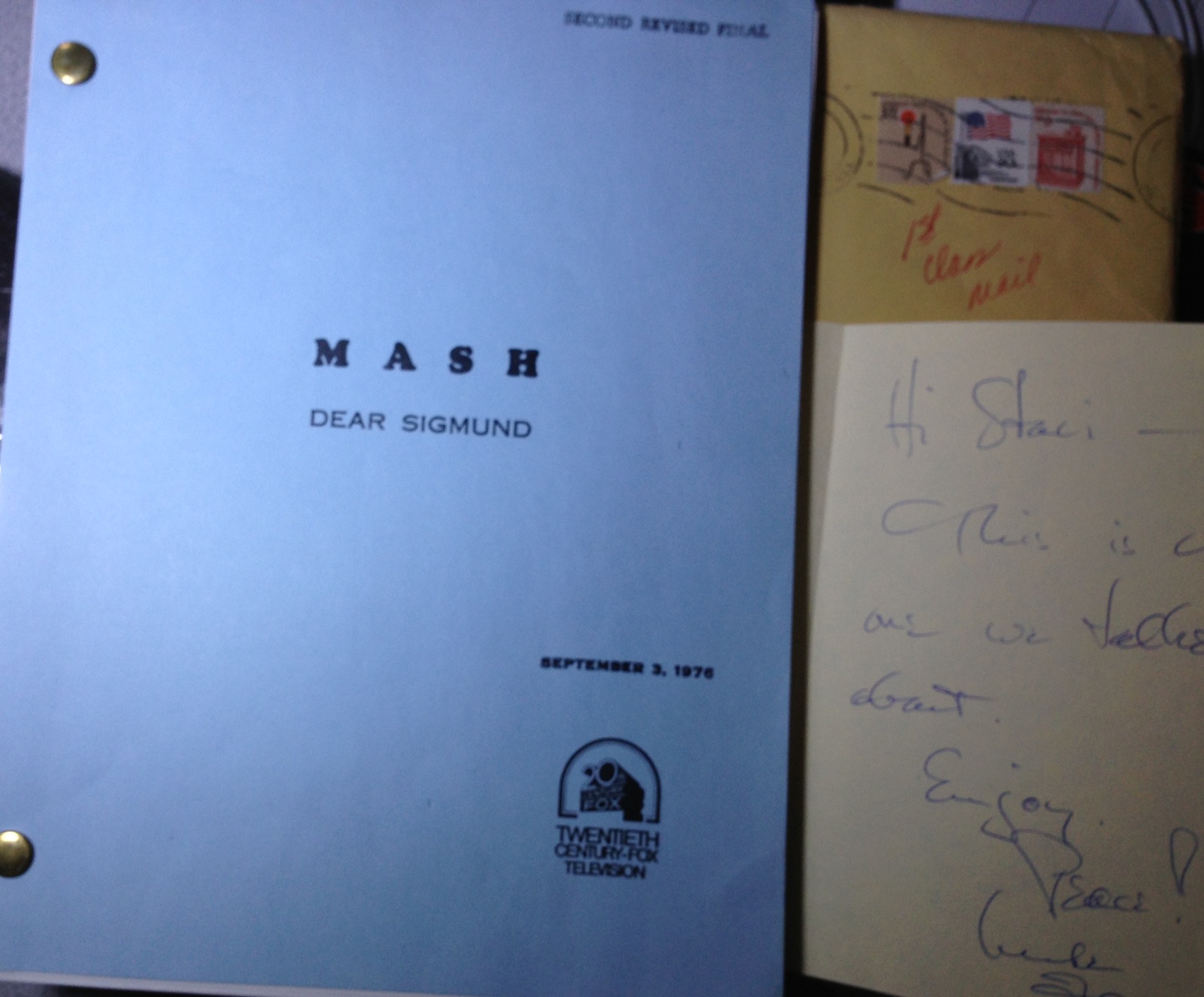
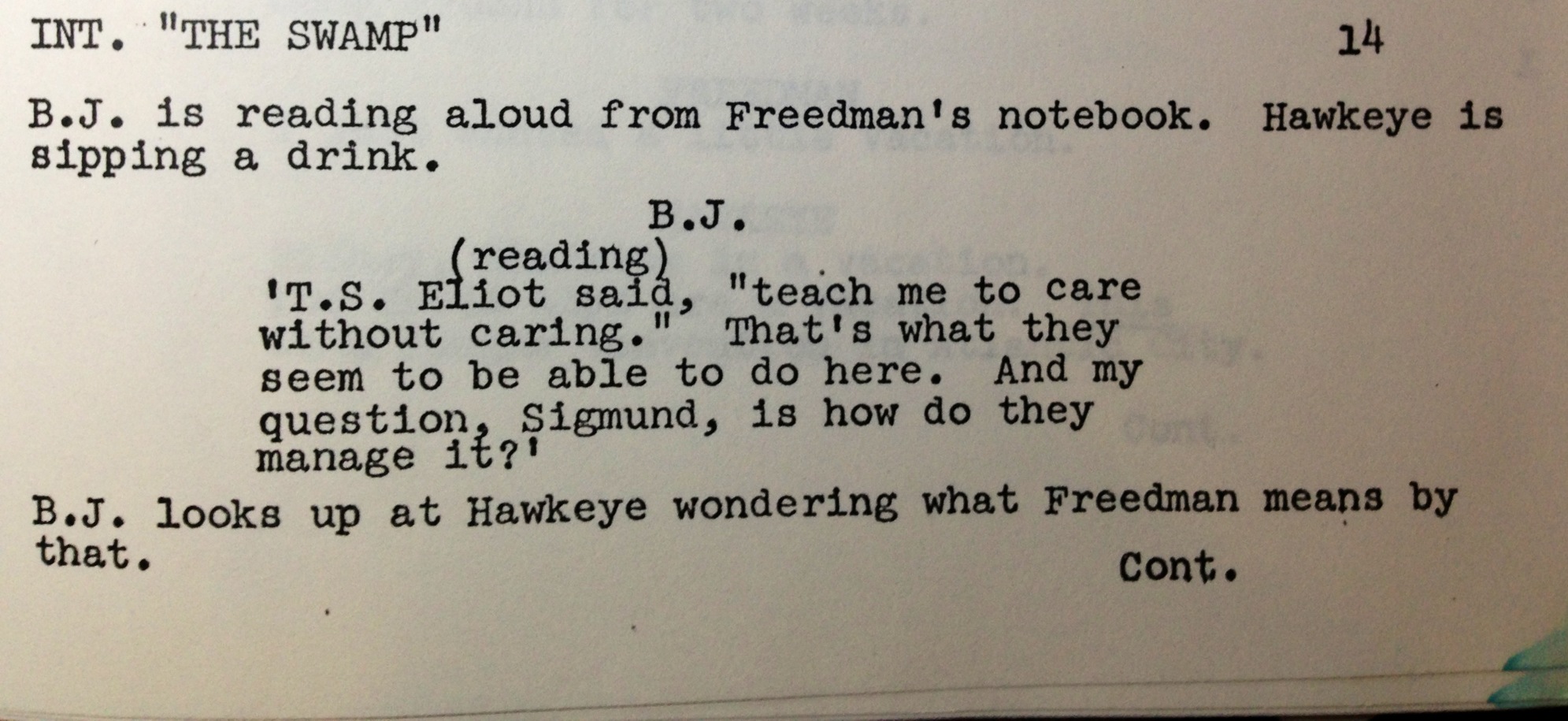
I met Mike Farrell as a young reporter when he came to St. Louis to help raise money for Harriett Woods’ successful race for Missouri lieutenant governor. The two quickly realized I spoke fluent M*A*S*H and Woods, a former reporter, even insisted I get Farrell’s autograph. (I was mortified.) Not long after, a manila envelope arrived at the St. Louis Post-Dispatch bureau. Inside, a blue-covered script and a handwritten note (with my name spelled right) from Farrell: “This is the one we talked about. Enjoy.”

The script I've kept close at hand since it arrived as a gift from Mike Farrell & his note.

The script I’ve kept close at hand since it arrived as a gift from Mike Farrell & his note.

Dated September 3, 1976, it was the second revised final script of Dear Sigmund — the episode that I’d mentioned as my favorite. I can’t remember but my guess is I kvelled at least a little about Allan Arbus, whose recurring portrayal of Dr. Sidney Freedman was a constant thread of sanity — and a spotlight on the right kind of insanity — throughout the series.

He was a mensch who drank Swamp martinis, played poker and could pull off a practical joke. He knew how to listen and when to act. Written by Alan Alda, Dear Sigmund is constructed as a letter from a psychiatrist fighting depression under brutal circumstances to the deceased Dr. Sigmund Freud because “who better than he would understand?”

It is completely absurd and makes total sense.

Talking about the episode, perhaps his best script, in the clip below, Alda said he often forgot Arbus wasn’t a psychiatrist. More than any of the doctors on M*A*S*H, I often wished Sidney Freedman was real.

Reading the script for the first time in a long while, it’s hard not to think of the events of the past week and how we cope — or don’t cope — with horror and grief. How we can cry in the afternoon but desperately search for a laugh before trying to sleep.

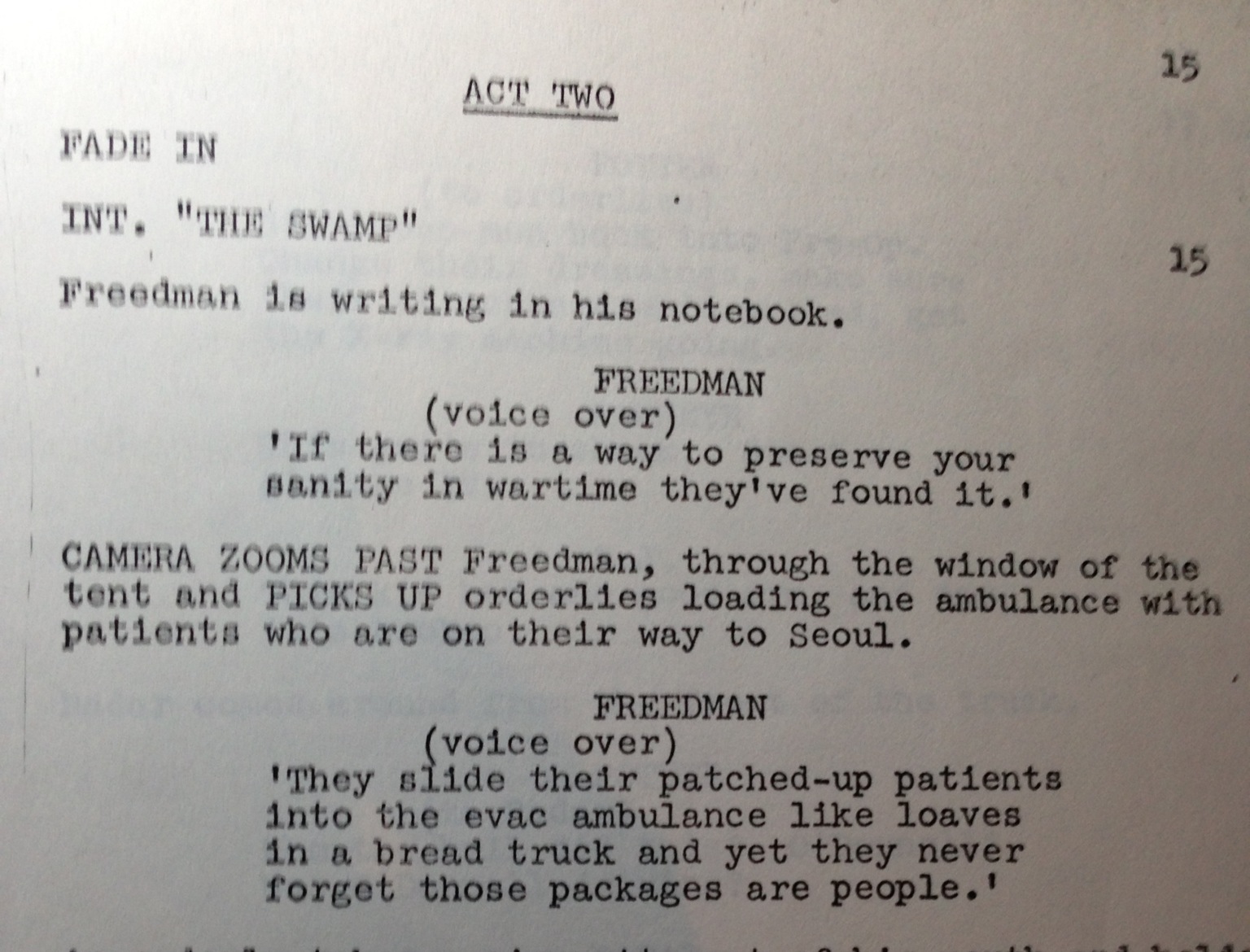
From "Dear Sigmund" by Alan Alda, 9/3/76

From “Dear Sigmund” by Alan Alda, 9/3/76

And

Excerpt: 'Dear Sigmund' by Alan Alda

Excerpt: ‘Dear Sigmund’ by Alan Alda

I have no research to back this up but I’ve always believed Arbus and his alter ego paved the way for many of the psychiatrists we’ve seen in pop culture since then, just as M*A*S*H made China Beach possible, He was the white hat to One Flew Over The Cuckoo’s Nest and Catch-22. Though I’ve never had the chance to ask Adam Arkin, I thought he channeled a little Arbus as Freedman when he was on West Wing.

I’m probably not alone in wishing Sidney Freedman was real. Here’s a Freedman mashup from YouTube that includes some of Dear Sigmund:

The reel illustrates what Daniel E. Slotnick wrote in The New York Times obit:

“He treated wounds of the psyche much as Capt. Hawkeye Pierce treated surgery patients: with a never-ending string of zingers.”

The genius of M*A*S*H was Hawkeye, Sidney and the others were more than a series of zingers or running gags. They were human. Even Frank. (I draw the line at Lt. Col. Flagg.)

While M*A*S*H is how so many of us know him, Arbus, who died today at 95, had a life outside of fictional Korea. He was a fashion photographer with ex-wife Diane Arbus and he saw war firsthand as a photographer for the U.S. Army Signal Corps during World War II.

The scarily talented Diane Arbus committed suicide in 1971, after their long separation and divorce. She would have turned 90 in March.

The professional moment that sends Sidney Freedman to the #4077 for Dear Sigmund comes when he thinks he has helped a young soldier face his demons. Freedman tells Hawkeye and B.J.:

“Actually the straw that broke my back was this one kid who heard voices telling him to kill himself. I spent a lot of time with him. Then one day he was very calm, relaxed. That’s sometimes a signal that they’ve made a decision, only… somehow I missed it. And that night after I went to sleep that sweet, innocent, troubled kid… listened to the voices.”

Freedman is at the #4077 to wake himself up as a doctor, as a person. He leaves reminded that even though he can’t beat everyone’s demons, he has to be able to beat his own to help.

I put the script back in the envelope, this thoughtful gift from a busy actor with better things to do, and think of all the ways we touch lives. Thank you, Mike Farrell, for understanding what this would mean to me. Thank you, Allan Arbus for being Sidney Freedman — and Alan Alda and all the other artists who brought M*A*S*H to TV and to us.

Sidenote: Diane Arbus was the younger sister of poet Howard Nemerov, who lived in University City, Mo., a few blocks from where I am typing.

4/4/68: RFK, MLK & ‘The Awful Grace Of God’

It is impossible to watch this video of Robert Kennedy breaking the news of Martin Luther King Jr.’s assassination to an Indianapolis crowd without knowing that combination of grace, wisdom and pragmatism that spoke from the heart to the hearts of so many would be gone so soon. And yet … and yet, it is impossible not to watch without a glimmer of hope that the ineffably awful doesn’t have to mean the end of what is right. (via Upworthy)

‘I tried to get a pulse …’

If you want to understand Dianne Feinstein on guns, watch this video recollection of Nov. 27, 1978, the day George Moscone & Harvey Milk were assassinated in San Francisco City Hall. When one of your memories is of putting a finger through a bullet hole in a friend as you try to save him, you know violence in a way no one ever should.

For those about to have a kneejerk reaction, this helps explains her passion. It’s not about policy — it’s about why gun safety matters so much to her.

Thanks to Josh Marshall at Talking Points Memo for sharing this video and for taking the time to try to unpeel some of this for people watching the politics — like today’s testy exchange with Ted Cruz — without understanding that passion.

NASCAR Exec Says Crash Video Takedown Was Exception, Not Rule

Saturday afternoon NASCAR set off a social media storm when it used — technically, abused — the DCMA YouTube takedown tool to block a quickly spreading fan video of a horrific crash at Daytona. NASCAR admitted late that afternoon that the takedown was about controlling the video, saying it was a matter of “respect” for the 30-plus injured fans, while YouTube reversed the block within hours because it was not “copyright infringing.”

Now Marc Jenkins, NASCAR vice president of digital media, has explained the racing league’s actions to the Washington Post‘s Erik Wemple. Jenkins told Wemple they used the copyright takedown as the only available way to stop the Tyler Anderson video out of caution, not because it was a copyright violation. He’d also really rather we don’t see it as censorship or as routine.

So what is NASCAR’s usual policy for fan multimedia? Jenkins told Wemple:

We don’t enforce the guidelines unless the content is used commercially. … We do proactively go after pirated video of the television broadcast, but that’s the only time we use it. … We encourage our fans to take those videos and to send them out on Facebook or to tweet’em out … We’ve partnered with Twitter in the past. Our sport is based on, and one of our great attributes is — it’s open and easy to interact with us.

Jenkins didn’t apologize or say it wouldn’t be repeated, although I doubt NASCAR would do so again by abusing its YouTube takedown power unless it legitimately can claim copyright infringement.

What happened Saturday shows, though, that the policy holds only as long as NASCAR approves of what the fan is doing or is willing to tolerate. As I wrote then:

If NASCAR wants the boost from social media, as it clearly does given its interaction on Twitter, Facebook and other places, it should go all in.

Here’s Tyler’s video:

The Onion’s Edgy Oscars Humor Goes Over A Cliff

Seth MacFarlane delivered the kind of Oscars humor you’d expect from him. I laughed at some of his jokes and heard more than a few that made me cringe — misogynistic is almost kind — but I’m not a fan and I’m not in his target audience. If it had been Saturday Night Live, I may have changed the channel.  I hung in because it was the Academy Awards, probably proving the point to ABC and the Academy that there is an audience that will come no matter what in addition to the audience they’re trying to pull in with a host like the creator of Family Guy and Ted. I did mention one joke on Twitter that fell particularly flat for me — and predictably was accused of not getting that it was a joke.

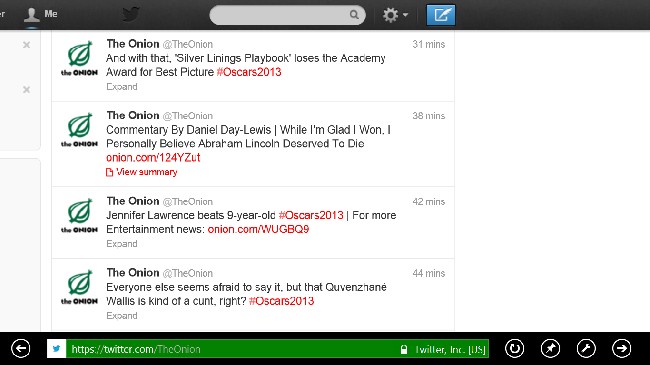
Meanwhile, the folks at The Onion were doing what they do 24/7, churning out topical humor that taps into the zeitgeist of the moment with varying degrees if taste or lack thereof. Often that humor is simple parody that draws a quick laugh; sometimes it’s knife-sharp edgy. Sunday night during the Oscars, The Onion went off a cliff with the last tweet in the image below, using a coarse epithet that someone apparently thought would-be funny when paired aimed at nine-year-old Quvenzhane Wallis They quickly found out that even  some of their biggest fans have more boundaries than they do. Following an immediate uproar, the tweet was deleted nearly an hour later.


If the only people who cared were those who already don’t like The Onion, well, consider the source. But when people who like your brand feel betrayed, you have a different problem. They think they know what to expect, even if sometimes it’s not funny or the taste level of something that makes them giggle is below 1/8 of a tank. They don’t want to think they have anything in common with someone who would toss the C word at a child as a joke.

Deleting it doesn’t make that go away.

As for the notion that pushing back at humor equates to being humorless,

Update: The Onion deleted the tweet Sunday night. Midday Monday CEO Steve Hannah apologized to Quvenzhané Wallis and the Academy of Motion Picture Arts and Sciences via its Facebook page. (The apology is now on theonion.com too.) Hannah said new and tighter Twitter procedures are in place and promised disciplinary action.

It was crude and offensive—not to mention inconsistent with The Onion’s commitment to parody and satire, however biting.

No person should be subjected to such a senseless, humorless comment masquerading as satire.

The tweet was taken down within an hour of publication. We have instituted new and tighter Twitter procedures to ensure that this kind of mistake does not occur again.

In addition, we are taking immediate steps to discipline those individuals responsible.

Miss Wallis, you are young and talented and deserve better. All of us at The Onion are deeply sorry.

Hannah strikes the right notes, especially for a publication not known for apologies or retractions.

No one who enjoys The Onion wants its sense of satire to be degraded. Many who enjoy it think The Onion can avoid that without being degrading.

Not everyone thinks an apology was warranted or that the tweet should have even been deleted.

Some of the responses are worse than the original tweet. Not posting them here but you scan Facebook or search for the C word and onion on twitter.

One more thought for now: I didn’t see the initial tweet as racist but as Oscar satire gone awry. Here’s the “commentary” “by” Best Actor winning Daniel Day-Lewis that went up minutes later:

I still don’t think it was racist but I can’t ignore the number of people who quickly saw it as racist

or as an example of continued racism by The Onion. If someone at The Onion thinks it’s ok to use the word about a woman of any age or about a child, I don’t think race would have held them back. I’m not going to dismiss their response, though. It’s from their perspective, their experience and it’s not up to me to say it doesn’t hurt.

NASCAR’s Social Media #FAIL

horrific crash at Daytona Saturday afternoon sent more than a dozen fans to the hospital. The drivers involved walked away — almost unbelievably so in the case of rookie Kyle Larson, who emerged from less than half of his car after the rest went into the fence and the grandstand.  

It also sent a lot of fans to social media with video and stills of the crash and its aftermath; many of them taken as eyewitnesses from the grandstands where the wreckage landed. Tyler Andersen, who describes himself on Twitter as a sophomore at Providence, posted a video that captured the whole sequence, including a tire that spun into nearby seats injuring someone near him and efforts to get assistance. He asked for prayers for the injured man before alerting ESPN to the video.

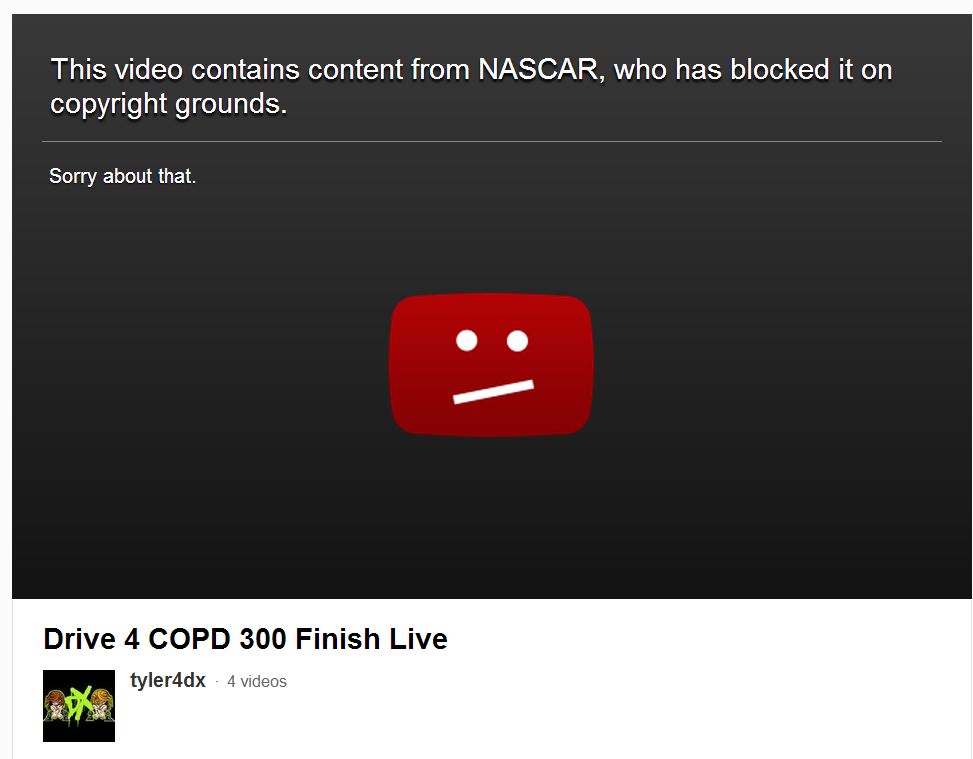
Andersen’s video quickly ricocheted, recommended to me by disparate parts of my timeline. I watched it once and when I went back to check something minutes later, it was gone.


Image

I don’t know if this was the automated YouTube copyright police at work or if it was taken down because NASCAR or a media rightsholder complained. If it was the former, NASCAR has a sophisticated enough social media operation to know that the video was yanked and should be back up. If it was the latter, NASCAR has a sophisticated enough social media operation to know that rights or no rights, the video wasn’t going away and they might as well avoid the criticism of it.

Instead, news video taken by someone who narrowly missed being injured) was blocked — and as of this writing is still blocked. Meanwhile, Deadspin (of course, it was Deadspin), smartly grabbed a copy of the video and popped it right up

Yes, NASCAR owns the copyright, something spelled out on tickets to races just as it is for many other events.

(There are legal concerns here; I expect all of the video, stills and other records could be evidence in any case emerging from the crash.) And I can understand setting up rules applying it to live streaming or layering in length limits.

I agree with Anthony De Rosa:

And I’m not encouraging any fan to take video or pictures at personal risk or to do it instead of helping those around them if that is possible.

But this dynamic isn’t going away. For instance, at least one other video of this crash is up now (via SBNation


Taking high-quality images and instantly sharing them is only getting easier. If NASCAR wants the boost from social media, as it clearly does given its interaction on Twitter, Facebook and other places, it should go all in.

  • Work with media partners to encourage fans to share video and pictures.
  • Avoid knee jerk reactions and keep an eye out for response to automated takedowns. Narrow the parameters for takedowns.
  • Be as inclusive and as engaged as possible.
  • Give your team the power to respond quickly and make sure a high-level exec is available for quick high-impact decisions, espcially during events.
  • And always remember: you can’t control the internet or social media. You only think you can.
  •  

    As for the video of today’s crash, my initial response after the takedown, shared or favorited by dozens, stands: 

    Update: As I was posting this, The Verge published a statement from NASCAR that it took down the video out of respect for those injured.

    Information on the status of those fans was unclear and the decision was made to err on the side of caution with this very serious incident.

    See above.

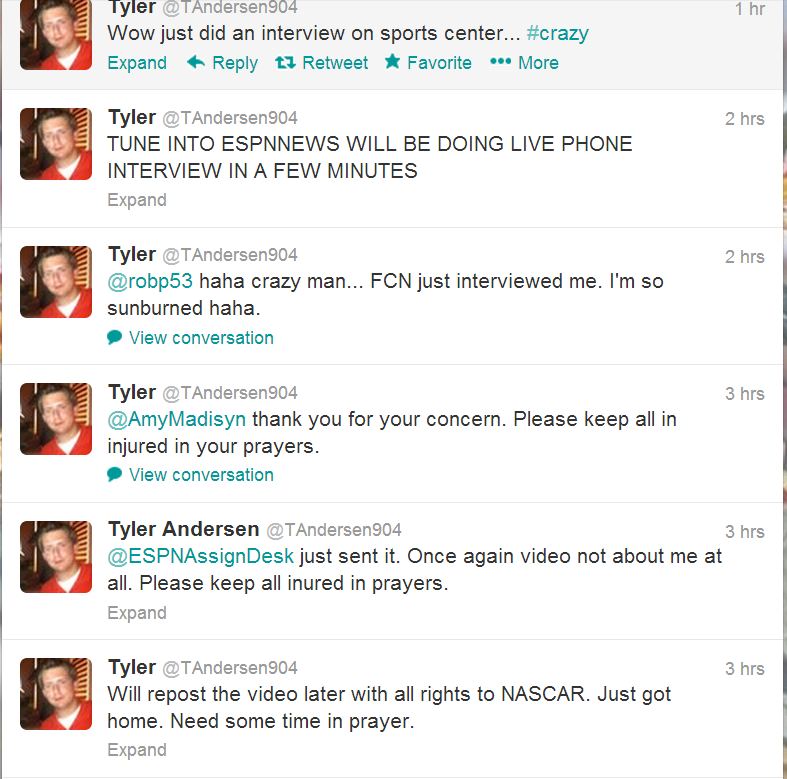
    Meanwhile, Andersen, whose Twitter feed reflects being overwhelmed by the emotions of the afternoon,

    tyler-twitter-nascar

    added this:

    Update 2: And YouTube saves NASCAR from having to reverse its decision by reinstating the video, telling the Washington Post’s Erik Wemple:

    Our partners and users do not have the right to take down videos from YouTube unless they contain content which is copyright infringing, which is why we have reinstated the videos.

    Will NASCAR try the copyright block again using the language on the ticket that claims it owns all rights? I hope not. Will other copyright owners get the message from YouTube that takedowns aren’t an accepted method of trying to control the flow of information? I doubt it.

    I also doubt NASCAR is at risk if losing its YouTube account but the Google video portal lists that as a possible consequence of misusing the power of DCMA:

    If you choose to request removal of content by submitting an infringement notification, please remember that you are initiating a legal process. Do not make false claims. Misuse of this process may result in the suspension of your account or other legal consequences.

    Related: NASCAR Exec Says Crash Video Takedown Was Exception, Not Rule